RWU AQS.209.91C: Invertebrates II
Prerequisites: Aquatic Animal Welfare Module offered through The Aquarium Vet E-quarist Course
Requirement Fulfillment: AQS Undergraduate Certificate
Note: One course in the AQS Undergraduate Certificate
Delivery: Other
Welcome to AQS 209: Invertebrates II - Not all organisms in aquaria or under cultivation are fish. This course examines sea jellies (e.g., free swimming and benthic gelatinous marine animals) and echinoderms (e.g., sea stars, urchins, sea cucumbers). These groups are common residents of public aquaria, some are important in commercial fisheries and often cultivated commercially through aquaculture. This course examines their anatomy and physiology as well as the elements necessary for husbandry and breeding. Diagnostic methods will be covered, as well as common diseases and treatments. 1 credits
Fall and Spring
Requirement Fulfillment: AQS Undergraduate Certificate
Note: One course in the AQS Undergraduate Certificate
Delivery: Other
Welcome to AQS 209: Invertebrates II - Not all organisms in aquaria or under cultivation are fish. This course examines sea jellies (e.g., free swimming and benthic gelatinous marine animals) and echinoderms (e.g., sea stars, urchins, sea cucumbers). These groups are common residents of public aquaria, some are important in commercial fisheries and often cultivated commercially through aquaculture. This course examines their anatomy and physiology as well as the elements necessary for husbandry and breeding. Diagnostic methods will be covered, as well as common diseases and treatments. 1 credits
Fall and Spring
Program Outline
Required
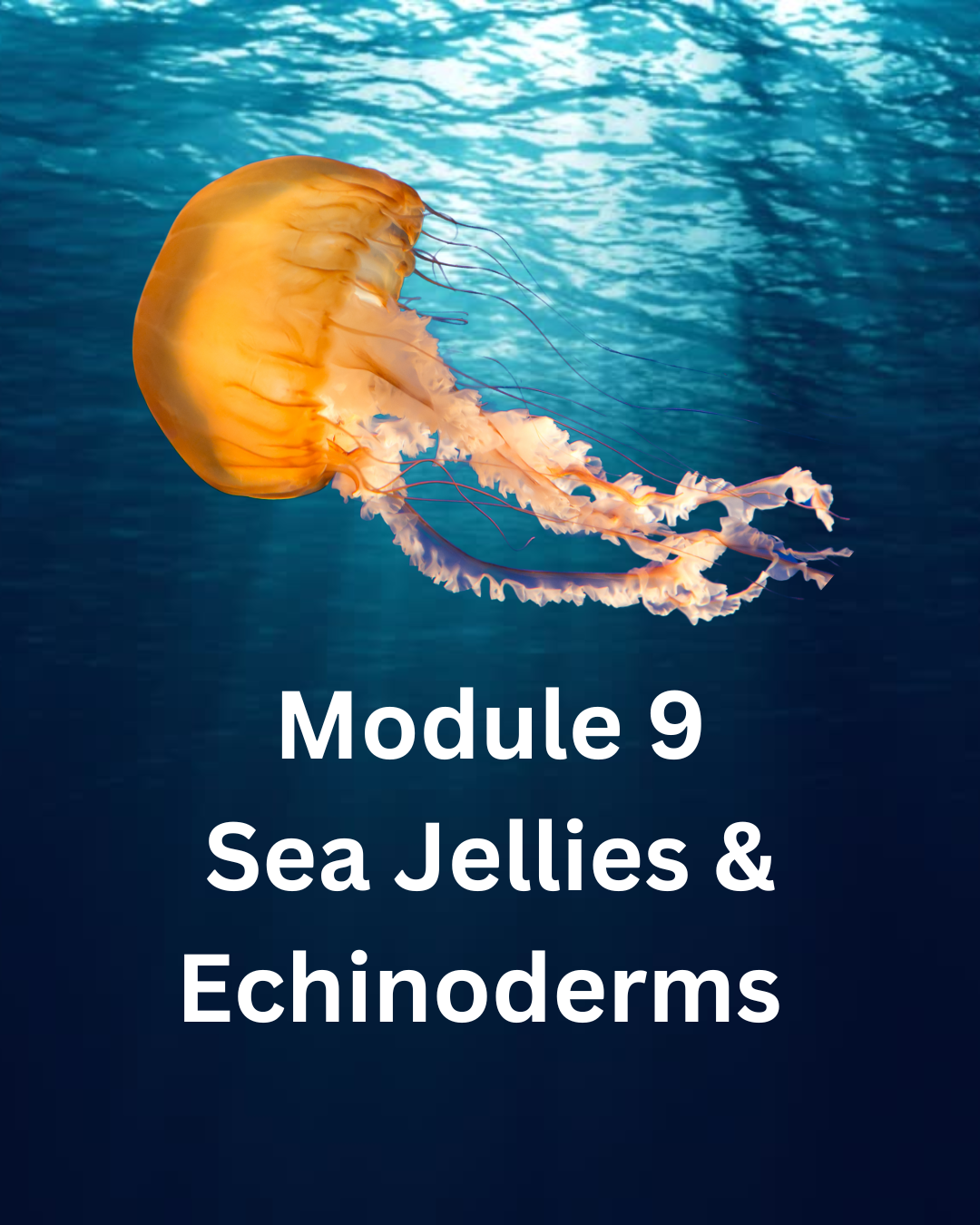
Module 9 - Echinoderms and Sea Jellies
Examines anatomy and physiology as well as husbandry and breeding. Diagnostics will be covered, as well as diseases and treatments.
- Access your courses anytime, anywhere, with a computer, tablet or smartphone
- Videos, quizzes and interactive content designed for a proven learning experience
- Unlimited access. Take your courses at your time and pace
- This program is designed to take 1-2 months with approximately 10-15 hours per week of study. If you put in more hours per week, you will finish sooner than the predicted 1-2 months
-
Share This Learning Path