Modules 1-4 Package Deal
Program Outline

Module 1 - Fish Anatomy & Physiology
Fish Anatomy and Physiology – examines teleost anatomy in its wide forms as well as practical physiology. To understand how fish survive in an aquatic environment is critical to maintaining their health and wellbeing. Normal anatomy is critical for diagnostics and post-mortems (module 2). Fish welfare (which is becoming increasingly important) will be covered in this section as will be the safe handling of fish.
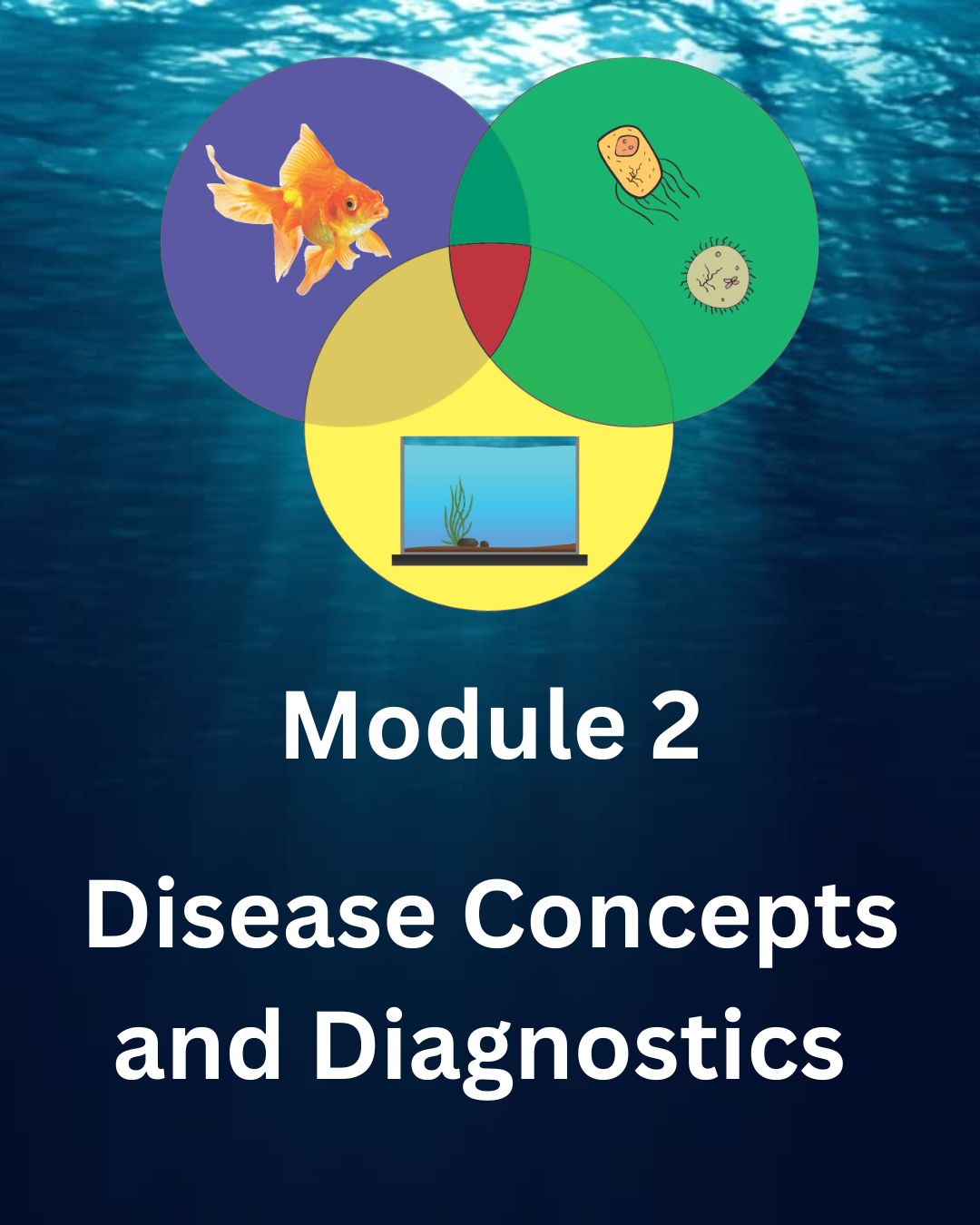
Module 2 - Disease Concepts and Diagnostics
Examines the concept of disease and what factors trigger disease. Will discuss stress as an important factor in the development of disease. Discusses the immune system and its involvement. Steps to making a diagnosis. The diagnostic section covers basic sample collection and will include a section on sedation / anaesthesia of fish. Euthanasia will be discussed. Proper post-mortem technique will be covered. Quarantine and biosecurity will be addressed, as well as introducing new animals to the aquarium environment. Disinfection processes. Zoonoses.

Module 3 - Water Chemistry and Quality
What is it and why it is the key to successful fish keeping? The nitrogen and carbon cycles will be discussed in detail. All water quality parameters will be covered as well as water testing. Fish transport will also be covered in this module, including the IATA guidelines.
Pricing
$800
- Access your courses anytime, anywhere, with a computer, tablet or smartphone
- Videos, quizzes and interactive content designed for a proven learning experience
- Unlimited Access to the LMS to complete four modules within 12 months from registration.
- Each module consists of 35,000 – 45,000 words, with accompanying pictures adding up to approximately 160 – 180 page document. The time involved in reading the material and sitting the examination would be approximately 15 to 20 hours for each module.
-
Share This Learning Path